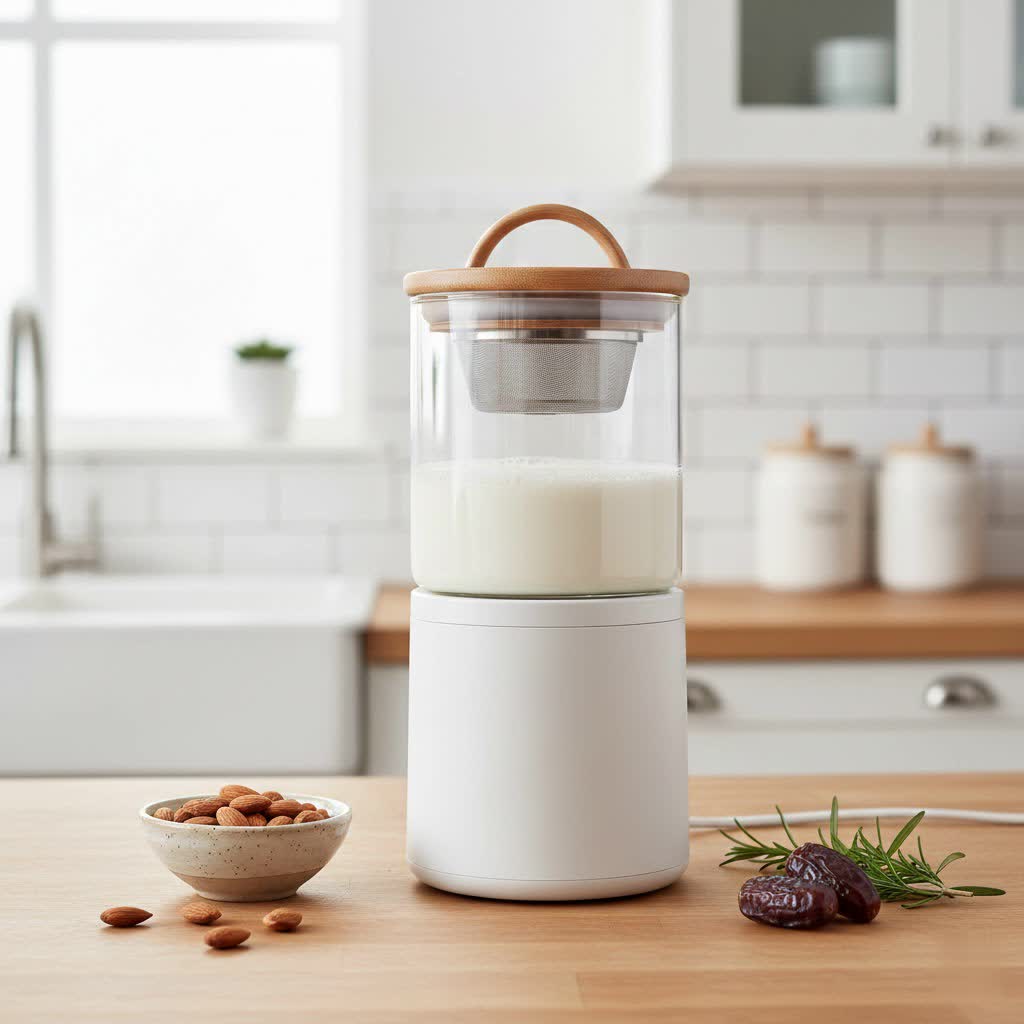
Are you tired of spending a fortune on specialty coffee shop drinks, or disappointed by store-bought oat milks that just don’t foam right? Creating your own barista-quality oat milk at home is a game-changer, offering a delicious, creamy, and frothable alternative that elevates your morning coffee and saves you money. With a few simple ingredients and techniques, you can achieve that silky micro-foam and rich texture previously reserved for professional baristas. Get ready to transform your home coffee experience.
Why Homemade Barista Oat Milk is a Game Changer
Making your own oat milk, especially a barista-style blend, comes with a host of advantages. Firstly, it’s significantly more cost-effective than repeatedly buying premium store brands, which can quickly add up. Beyond the savings, homemade oat milk offers health benefits, allowing you to control ingredients and avoid the fillers, gums, and artificial additives often found in commercial products [cite: 2, 1 (froth)]. You get a pure, wholesome plant-based milk tailored to your preferences.
From a culinary perspective, homemade barista oat milk provides a superior taste and texture for coffee, complementing espresso without overpowering it. Unlike some regular plant-based milks that can be watery or separate, a well-made barista blend integrates seamlessly, creating a luxurious mouthfeel. Environmentally, choosing homemade reduces packaging waste and the carbon footprint associated with transport, making it a more sustainable choice.
Understanding the Science of Barista Oat Milk
Achieving that coveted barista quality in oat milk isn’t magic; it’s a blend of chemistry and technique. The key lies in understanding how ingredients interact to create a stable, creamy, and frothable emulsion.
- The Role of Oats: The type of oats you use is fundamental. Rolled oats (old-fashioned) are highly recommended because they provide the necessary starch for creaminess without becoming overly gummy or slimy. Avoid quick oats or steel-cut varieties, which can lead to an undesirable texture due to their different processing or starch content [cite: 1 (froth)].
- The Importance of Fat: Dairy milk’s natural fat content is a primary reason it froths well. For oat milk to mimic this, adding a neutral-tasting oil is crucial. Oils like sunflower, grapeseed, light olive, avocado, or even walnut oil serve as emulsifiers, increasing the fat content and allowing the milk to froth and hold its form effectively [cite: 5, 2 (froth), 3 (froth)]. This fat coats air bubbles, stabilizing the foam.
- Proteins and Emulsification: While dairy relies on whey and casein proteins, oat milk primarily uses globulins. These globular proteins, combined with the added oils, form a stable emulsion. When blended, the oil breaks down into tiny droplets, which are then surrounded and stabilized by the oat proteins and water, preventing separation and contributing to the smooth texture.
- Stabilizers (and why store-bought uses them): Commercial barista oat milks often include stabilizers like gellan gum or dipotassium phosphate. These ingredients help prevent separation, improve frothing consistency, and crucially, stop the milk from curdling when mixed with acidic coffee [cite: 1 (froth), 2 (froth)]. While you can’t easily replicate these at home, understanding their function helps explain why homemade versions might behave slightly differently.
Essential Ingredients for the Perfect Brew
To craft your own excellent barista oat milk, you’ll need just a few core ingredients, with options for customization:
- Rolled Oats: Opt for high-quality, old-fashioned rolled oats. If gluten-free is a concern, ensure they are certified gluten-free.
- Cold Water: Using cold water is often recommended as it helps minimize the release of excess starches during blending, which can contribute to sliminess [cite: 1 (froth)].
- Neutral Oil: This is your secret weapon for creaminess and froth. Choose a neutral-flavored oil like sunflower, grapeseed, light olive, or avocado oil. Start with 1-2 tablespoons per batch.
- A Pinch of Salt: A small amount of salt enhances the flavor and can help balance the sweetness of the oats.
- Optional Enhancements:
- Sweeteners: For a touch of sweetness, consider adding one or two pitted Medjool dates or a teaspoon of maple syrup.
- Vanilla Extract: A splash of vanilla extract can add a pleasant aroma and taste.
- Cashews: For an extra creamy texture, some recipes suggest soaking a small amount of raw cashews (e.g., 1/3 cup) with the oats and blending them in.
Step-by-Step Guide: Crafting Your Barista Oat Milk
Making your own oat milk is surprisingly straightforward, taking only a few minutes.
- Preparation (Soaking): Some recipes suggest soaking oats for 30 minutes to 4 hours to soften them and enhance creaminess, particularly if you are also adding cashews [cite: 1 (froth), 3]. However, other recipes achieve good results without soaking, especially if blending time is kept short. If using cashews, soak them for 1-2 hours, then drain and rinse.
- Blending: Combine your rolled oats, cold water, neutral oil, salt, and any optional sweeteners or cashews in a high-powered blender. The typical ratio is 1 part oats to 3-4 parts water (e.g., 1 cup oats to 3-4 cups water), depending on your desired thickness [cite: 4 (froth)]. Blend for no more than 30-45 seconds on high speed. Over-blending is the primary culprit for slimy oat milk, as it over-processes the starches.
- Straining: Place a nut milk bag or several layers of cheesecloth over a large bowl or pitcher. Carefully pour the blended mixture into the bag. Gently squeeze the bag to extract all the liquid, allowing the milk to drain into the container. Avoid over-squeezing vigorously, as this can force out more starch and lead to a slimier texture.
- Storage: Transfer your fresh oat milk to an airtight container or glass bottle. Store it in the refrigerator. Homemade oat milk typically lasts for about 3 to 5 days. Always shake well before each use as some separation is natural.
Tips for Frothing and Steaming Like a Pro
The true test of barista-quality oat milk is its ability to froth beautifully for lattes and cappuccinos.
- The “Golden” Temperature Rule: This is perhaps the most crucial tip for oat milk. Unlike dairy milk, which can tolerate higher temperatures, oat milk proteins (globulins) are sensitive to heat. Steaming oat milk past 60°C (140°F) can cause these proteins to denature and clump together, leading to a flat, watery, or separated foam [cite: 2 (froth)]. Aim for a temperature between 55-60°C for optimal frothing.
- Equipment for Frothing:
- Steam Wand: If you have an espresso machine, use its steam wand. Introduce air briefly, then submerge the wand to create a whirlpool effect, aiming for that ideal temperature.
- French Press: Pour your oat milk into a French press, and vigorously pump the plunger up and down until frothy.
- Handheld Frother: These inexpensive battery-operated whisks are great for individual servings.
- Whisk: For a low-tech approach, vigorously whisk warmed oat milk in a saucepan.
- Technique: Regardless of the tool, start with cold oat milk. For steam wands, aerate for a few seconds to incorporate air, then lower the wand to create a vortex, integrating the microfoam throughout the milk until it reaches the desired temperature.
Troubleshooting Common Homemade Oat Milk Issues
Even with the best intentions, you might encounter some common challenges.
- Slimy Texture: This is often the most frustrating issue. It’s usually caused by over-blending the oats, using quick oats (which break down too easily), or over-squeezing the nut milk bag [cite: 1 (froth), 4 (froth)]. Ensure blending time is short (under 45 seconds) and use rolled oats.
- Lack of Froth: If your oat milk isn’t frothing, consider these points:
- Insufficient Fat: Did you add enough neutral oil? Increasing the oil slightly can help [cite: 5, 2 (froth)].
- Incorrect Temperature: Revisit the 60°C rule. Overheating collapses the foam [cite: 2 (froth)].
- Oat-to-Water Ratio: A more concentrated oat milk (less water) tends to be creamier and froth better [cite: 4 (froth)].
- Curdling in Coffee: Homemade oat milk can sometimes curdle in hot, acidic coffee, especially dark roasts. This is a natural reaction to the pH difference. To mitigate this:
- Allow your coffee to cool slightly before adding milk.
- Warm your oat milk gently before adding it to coffee.
- Use a slightly higher fat content in your oat milk.
- Separation: It’s natural for homemade oat milk to separate in the fridge. This simply means the water and solids are settling. A good shake before each use will redistribute everything, bringing back its smooth consistency.
Beyond the Latte: Creative Uses for Your Homemade Oat Milk
Your homemade barista oat milk is incredibly versatile, extending far beyond your morning coffee:
- Smoothies: Adds a creamy, rich base to any fruit or vegetable smoothie.
- Baking: Use it as a dairy-free substitute in muffins, pancakes, waffles, and other baked goods for a moist texture.
- Cooking: Incorporate it into creamy sauces, soups, or even vegan mashed potatoes.
- Using Leftover Oat Pulp: Don’t throw away the leftover pulp from straining! It’s packed with fiber and nutrients. Use it in granola bars, energy balls, muffins, or even mix it into oatmeal.
Conclusion
Mastering barista-quality oat milk at home is a rewarding journey that empowers you to enjoy superior plant-based beverages without the commercial price tag or unwanted additives. By understanding the science of oats and fats, perfecting your blending and straining techniques, and adhering to the golden temperature rule for frothing, you can consistently achieve creamy, delicious, and beautifully frothed oat milk. Experiment with ratios and optional ingredients to find your perfect recipe, and soon you’ll be creating café-worthy drinks that impress even the most discerning coffee lovers. What new coffee creations will you unlock with your homemade oat milk?
Frequently Asked Questions
What is the main difference between regular and barista oat milk?
Table is empty.Barista oat milk, whether homemade or store-bought, is specifically formulated to be creamier and froth better than regular oat milk. This is typically achieved by including a higher fat content, often through neutral oils, which helps stabilize the emulsion and create a silky micro-foam ideal for coffee beverages. Regular oat milk tends to be thinner and may separate or not froth as well.
How can I prevent my homemade oat milk from becoming slimy?
To prevent sliminess, use rolled oats (not quick or steel-cut), avoid over-blending (blend for a maximum of 30-45 seconds), and don’t over-squeeze the nut milk bag when straining [cite: 1 (froth), 4 (froth)]. These actions minimize the release of excess starches, which are responsible for the undesirable slimy texture.
What kind of oil is best for barista oat milk?
Neutral-tasting oils are best for barista oat milk as they add richness and frothing capability without altering the flavor of your coffee. Good options include sunflower oil, grapeseed oil, light olive oil, avocado oil, or even walnut oil. These oils help emulsify the milk and create a creamy texture.
Why does my homemade oat milk curdle in coffee?
Homemade oat milk can curdle in coffee due to the acidity of the coffee reacting with the oat proteins. Commercial barista blends often contain stabilizers like dipotassium phosphate to prevent this. To reduce curdling at home, try letting your coffee cool slightly before adding milk, or gently warm your oat milk beforehand.
How long does homemade barista oat milk last?
Homemade barista oat milk should be stored in an airtight container in the refrigerator and is typically best consumed within 3 to 5 days. Always give it a good shake before each use, as some natural separation may occur.