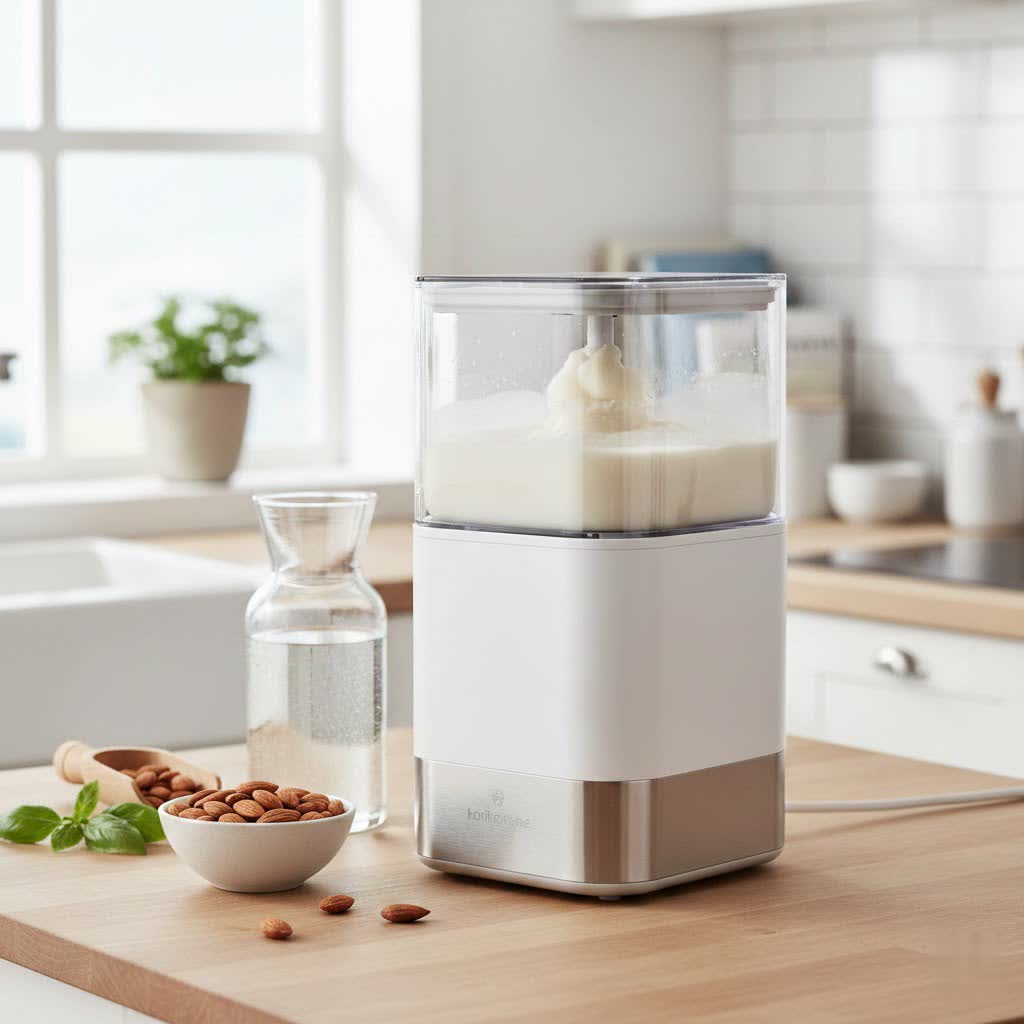
Are you looking for ways to trim your grocery budget without sacrificing quality? With the rising costs of store-bought plant-based milks, many consumers are turning to their kitchens to create homemade alternatives. Understanding How To Calculate Cost Savings Of Homemade Milk can reveal significant financial benefits, along with enhanced nutritional value and environmental advantages. This guide will walk you through the precise steps to uncover how much you can truly save by making your own delicious, fresh milk at home.
Understanding the True Cost of Store-Bought Milk
Before diving into homemade savings, it’s essential to understand what you’re currently paying for with store-bought plant milks. Beyond the sticker price, commercial products often include various additives like gums, emulsifiers, and stabilizers to achieve desired texture and extended shelf life. While convenient, these ingredients can sometimes be unnecessary and can even alter the flavor or nutritional profile of the milk.
Popular plant-based milks, such as almond, oat, and soy, typically range from $3 to $5 or even more for a 32-ounce or half-gallon carton. These costs can quickly add up, especially for households with high consumption. Moreover, the environmental footprint of these products, from manufacturing to transportation and single-use packaging, is another factor to consider.
Deconstructing the Cost of Homemade Milk
Making milk at home simplifies the ingredient list and gives you full control. The primary components are usually just nuts, grains, and water.
- Key Ingredients: For almond milk, you’ll need raw almonds; for oat milk, rolled oats; and for soy milk, soybeans. You might also add optional sweeteners like dates or maple syrup, and a pinch of salt for flavor. Buying these ingredients in bulk often yields the best value, significantly reducing your per-batch cost.
- Equipment Investment: The initial outlay for equipment is a crucial factor.
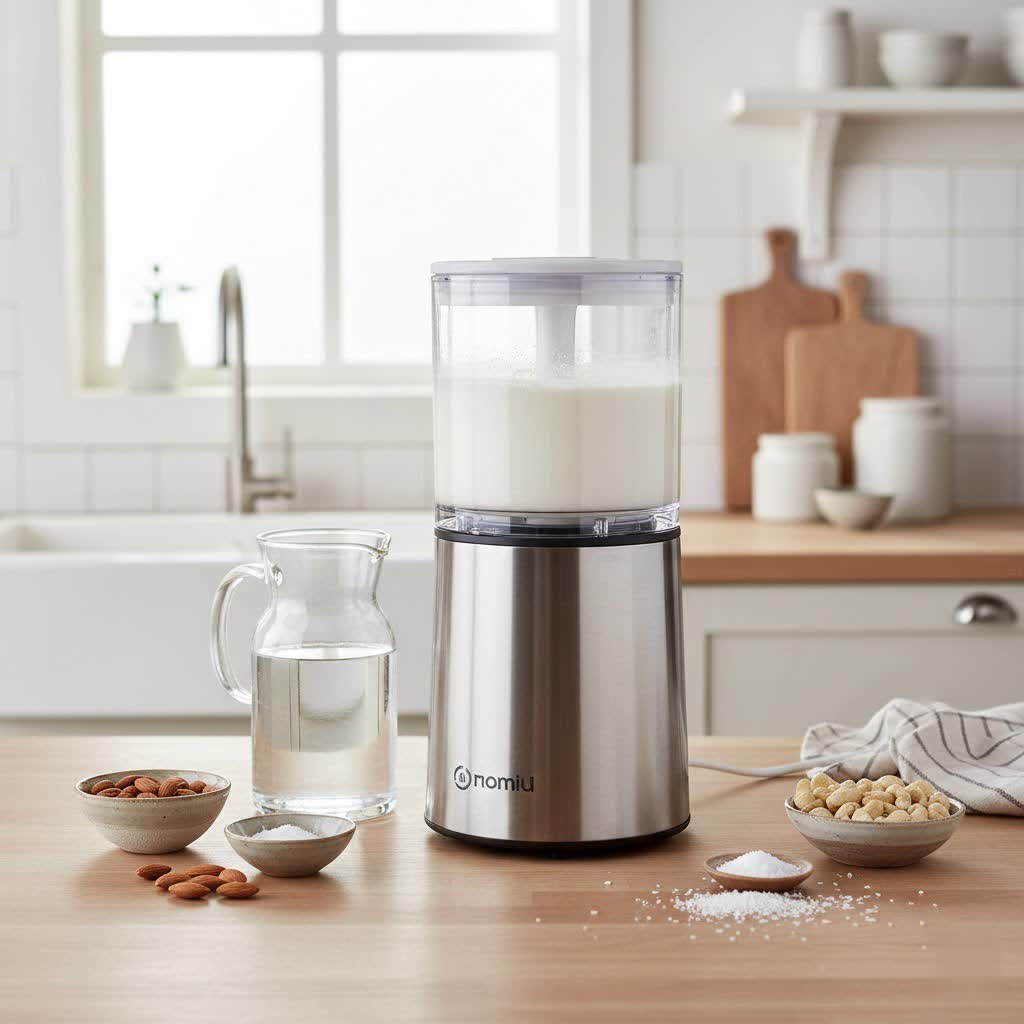
- Blender: A standard blender can work for some milks, but a high-speed blender (like a Vitamix) or a dedicated plant milk maker (like an Almond Cow or MioMat) offers superior smoothness and efficiency. These machines can range from $50 to over $300.
- Nut Milk Bag/Fine-Mesh Strainer: Essential for straining pulp from nut or oat milk, these are relatively inexpensive.
- Time Investment: While making homemade milk is generally quick, it does require a small amount of your time for soaking (for some ingredients like almonds or soybeans), blending, straining, and cleaning. Most recipes take about 5-20 minutes of active prep time.
Calculating Ingredient Cost Per Batch: To determine the cost of your homemade milk, you need to break down the price of your raw materials by the amount used. For instance, if a 1-pound bag of almonds costs $8 and contains approximately 3 cups, and your recipe uses 1 cup of almonds, your almond cost per batch is $8 / 3 = $2.67. Add the negligible cost of water and any optional sweeteners, and you get your total ingredient cost for that batch.
Step-by-Step Guide: Calculating Your Savings
Let’s put theory into practice with a clear methodology for calculating your potential savings.
- Determine Your Weekly/Monthly Milk Consumption: Start by tracking how much store-bought plant milk your household uses in a typical week or month. Do you go through two half-gallons of almond milk weekly? Or one carton of oat milk every other day?
- Calculate Current Store-Bought Expenditure: Multiply your weekly/monthly consumption by the average price you pay per carton.
- Example: If you buy two 64 oz (half-gallon) cartons of almond milk per week at $4.50 each, your weekly expenditure is $9.00 ($4.50 x 2). Monthly that’s $36.00.
- Calculate Homemade Milk Production Cost: Based on your chosen recipe and ingredient prices, calculate the cost to produce an equivalent amount of homemade milk.
- Example (Almond Milk, 64 oz): You might need 1.5 cups of almonds (costing $4.00), plus a few cents for filtered water and optional sweeteners. Total homemade ingredient cost: ~$4.05.
- Factor in Equipment Cost (Amortization): This is where many overlook potential expenses. If you bought a $200 milk maker that you expect to use for 4 years (approximately 208 weeks), the weekly equipment cost would be roughly $0.96 ($200 / 208 weeks). Divide this by the number of batches you make per week to get a per-batch equipment cost.
- Example: If you make two 64 oz batches per week, your per-batch equipment cost is $0.48 ($0.96 / 2).
- Calculate Savings Per Batch/Unit: Subtract your total homemade cost (ingredients + amortized equipment) from the store-bought price for the same volume.
- Example (per 64 oz): Store-bought ($4.50) – Homemade ($4.05 ingredients + $0.48 equipment) = -$0.03. In this specific example, the savings are negligible per batch when considering equipment amortization. However, if the machine lasts longer or is used more frequently, the per-batch cost decreases. For many, the non-financial benefits outweigh this small difference.
- Project Annual Savings: Multiply your calculated savings per unit by your total annual consumption. Even small savings per unit can add up significantly over a year.
Real-World Examples: Almond, Oat, and Soy Milk Cost Comparisons
Let’s look at some common plant-based milks and potential savings:
- Almond Milk: A 32 oz carton of store-bought almond milk might retail for $2.99 to $4.44. Homemade almond milk for the same volume can cost approximately $1.86 to $2.04, factoring in bulk almond purchases. This translates to savings of $1.13 to $2.40 per 32 oz. Annually, these savings can accumulate to hundreds of dollars, potentially reaching over $1,600 for high-volume users of organic alternatives.
- Oat Milk: With store-bought oat milk often priced around $5 per half-gallon, making it at home is remarkably cheaper. Using rolled oats, a half-gallon of homemade oat milk can cost as little as $1. This could lead to annual savings of over $190, assuming weekly consumption. The initial investment in a high-powered blender might be the main hurdle, but the payback period can be surprisingly short.
- Soy Milk: Store-bought soy milk can cost up to $5 per quart. Homemade soy milk, particularly with a dedicated machine, can be made for as low as $0.50 per quart. This represents a substantial saving of up to 90% per quart, making homemade soy milk one of the most cost-effective alternatives.
Maximizing Your Homemade Milk Savings
To truly maximize your savings and enjoy the process, consider these tips:
- Buying in Bulk: Purchase nuts, seeds, and grains from bulk bins at natural food stores or online suppliers. This dramatically reduces the per-unit cost of your ingredients. Look for sales and stock up when prices are low.
- Optimizing Recipes: Experiment with the ingredient-to-water ratio. You might find that a slightly less concentrated milk still meets your taste and texture preferences, further reducing ingredient costs without compromising quality.
- Utilizing Pulp: Don’t discard the leftover pulp from nuts or oats! Almond pulp can be dried and ground into flour for baking, added to smoothies, or used to make crackers or energy bites. This “zero-waste” approach enhances your savings by giving you a secondary ingredient.
- Smart Equipment Choices: Evaluate your consumption and budget. If you consume plant milk infrequently, a simple blender and nut milk bag might suffice. For daily users, a dedicated milk maker could pay for itself quickly and offer greater convenience and consistency.
Beyond the Pennies: The Value of Homemade Milk
While financial savings are a powerful motivator, the benefits of homemade milk extend far beyond your wallet.
“Making your own plant milk isn’t just about saving money; it’s about reclaiming control over what you consume. You eliminate unnecessary additives and preservatives, and you get to truly taste the freshness of natural ingredients.”
- Nutritional Benefits: Homemade milk contains only the ingredients you choose, free from undesirable additives, gums, and fillers often found in commercial products. This means a purer, often more nutrient-dense beverage.
- Customization: You have complete control over the flavor, sweetness, and consistency. Want it creamier? Add more nuts. Prefer it sweeter? Adjust your natural sweeteners. This level of customization is impossible with store-bought options.
- Environmental Impact: By making milk at home, you significantly reduce packaging waste, contributing to a more sustainable lifestyle. Reusing glass bottles for storage further minimizes your environmental footprint.
- Freshness and Taste Superiority: Homemade milk is often praised for its fresher, richer taste compared to its processed counterparts. You’ll notice the difference, especially in coffee, smoothies, or when simply enjoying a glass.
Conclusion: Unleashing Your Savings Potential
Making your own plant-based milk is a simple yet impactful way to save money, enhance your diet, and reduce your environmental impact. By understanding how to calculate cost savings of homemade milk, you can clearly see the financial advantages of this kitchen endeavor. From almond to oat to soy milk, the numbers consistently show that homemade options are often more economical, especially for regular consumers. Beyond the economic benefits, the ability to control ingredients, customize flavors, and enjoy fresher, additive-free milk offers invaluable returns that transcend monetary value. Are you ready to take control of your milk and unlock a world of savings and better health?
Frequently Asked Questions
Is it always cheaper to make your own plant milk?
Table is empty.While homemade milk is generally more cost-effective, especially for frequent consumers and those who buy ingredients in bulk, initial equipment costs (like a high-speed blender or milk maker) need to be factored in. For very infrequent use, or if raw ingredient prices are unusually high, the convenience of store-bought might marginally outweigh the savings.
How long does homemade milk last?
Homemade plant milk typically lasts for 3-5 days when stored in an airtight container in the refrigerator. Unlike store-bought versions, it doesn’t contain preservatives, so its shelf life is shorter, emphasizing its freshness.
What equipment do I need to make milk at home?
At a minimum, you’ll need a blender and a nut milk bag or fine-mesh strainer. For smoother, more consistent results, a high-speed blender or a dedicated plant milk machine is highly recommended.
Can I use any nuts/grains to make milk?
Most nuts (almonds, cashews, walnuts, pecans) and some grains (oats, rice, quinoa) can be used to make plant milk. Each offers a unique flavor and texture, allowing for diverse culinary experimentation.
Are the nutritional benefits significantly different?
Homemade milk often boasts a cleaner nutritional profile due to the absence of added sugars, gums, oils, and artificial flavors found in many commercial varieties. You retain more natural nutrients from the main ingredient.
What about the time commitment?
Making a batch of homemade milk typically requires about 5-10 minutes of active preparation, plus soaking time for certain ingredients (like almonds). While it’s a small commitment, it’s easily integrated into a weekly routine.